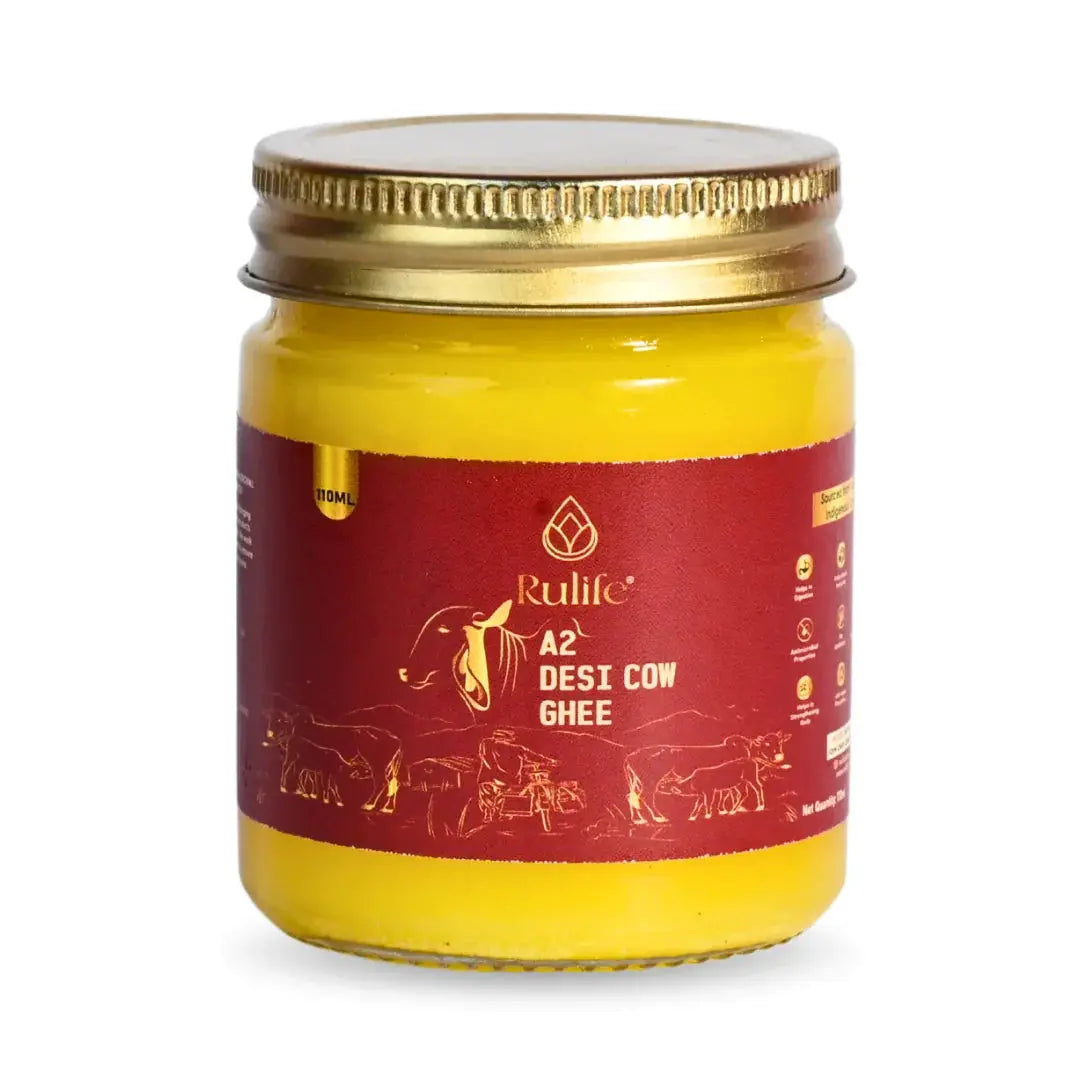
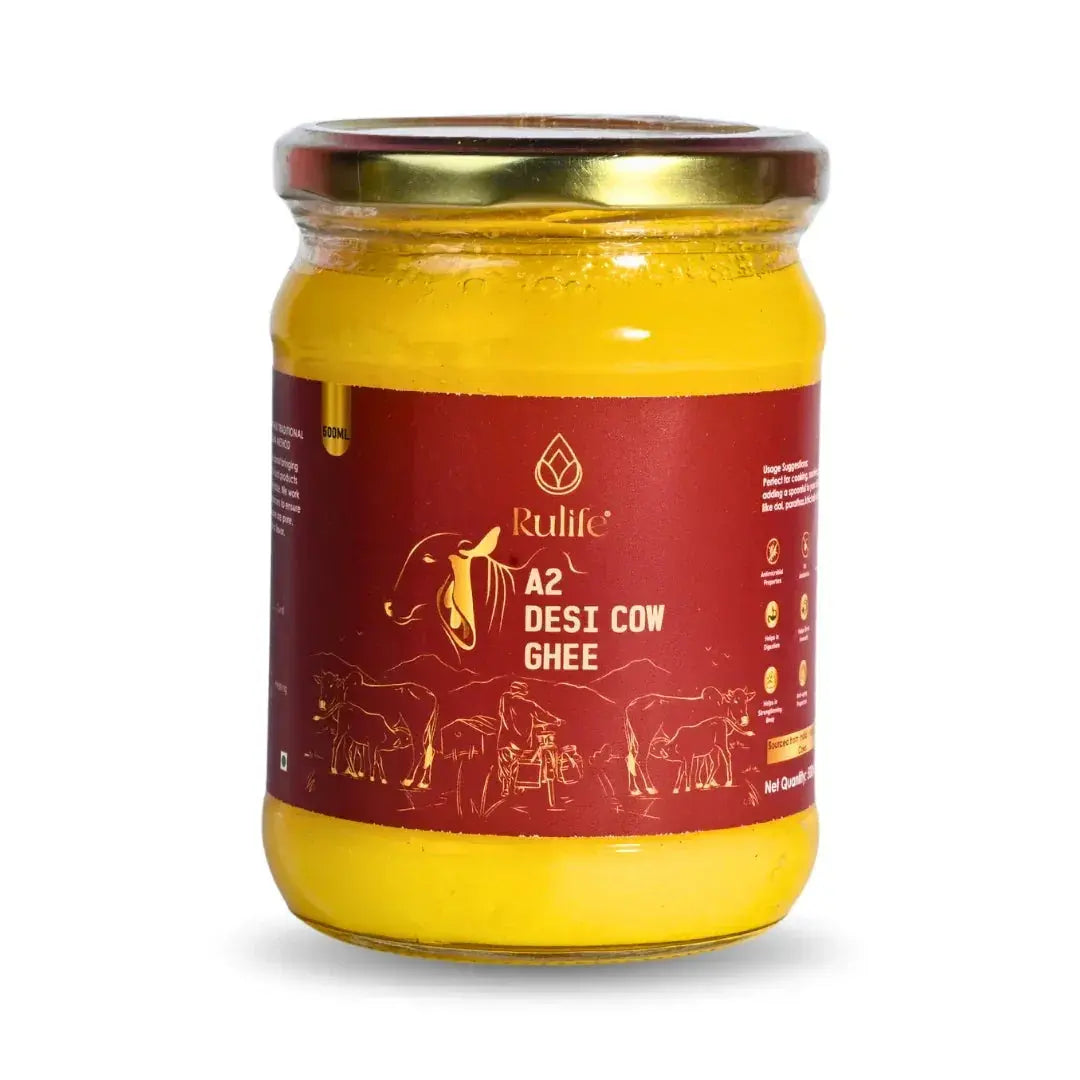
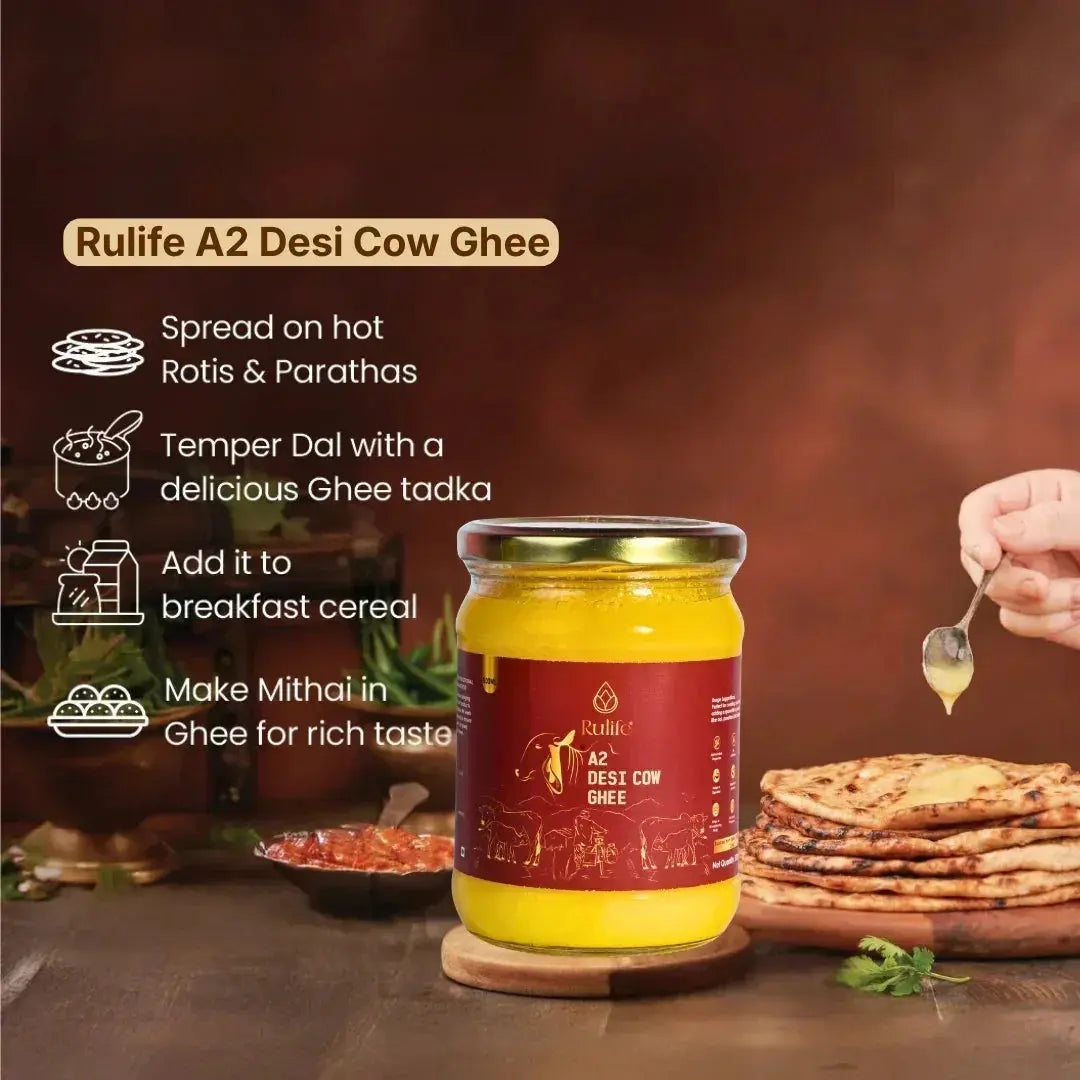
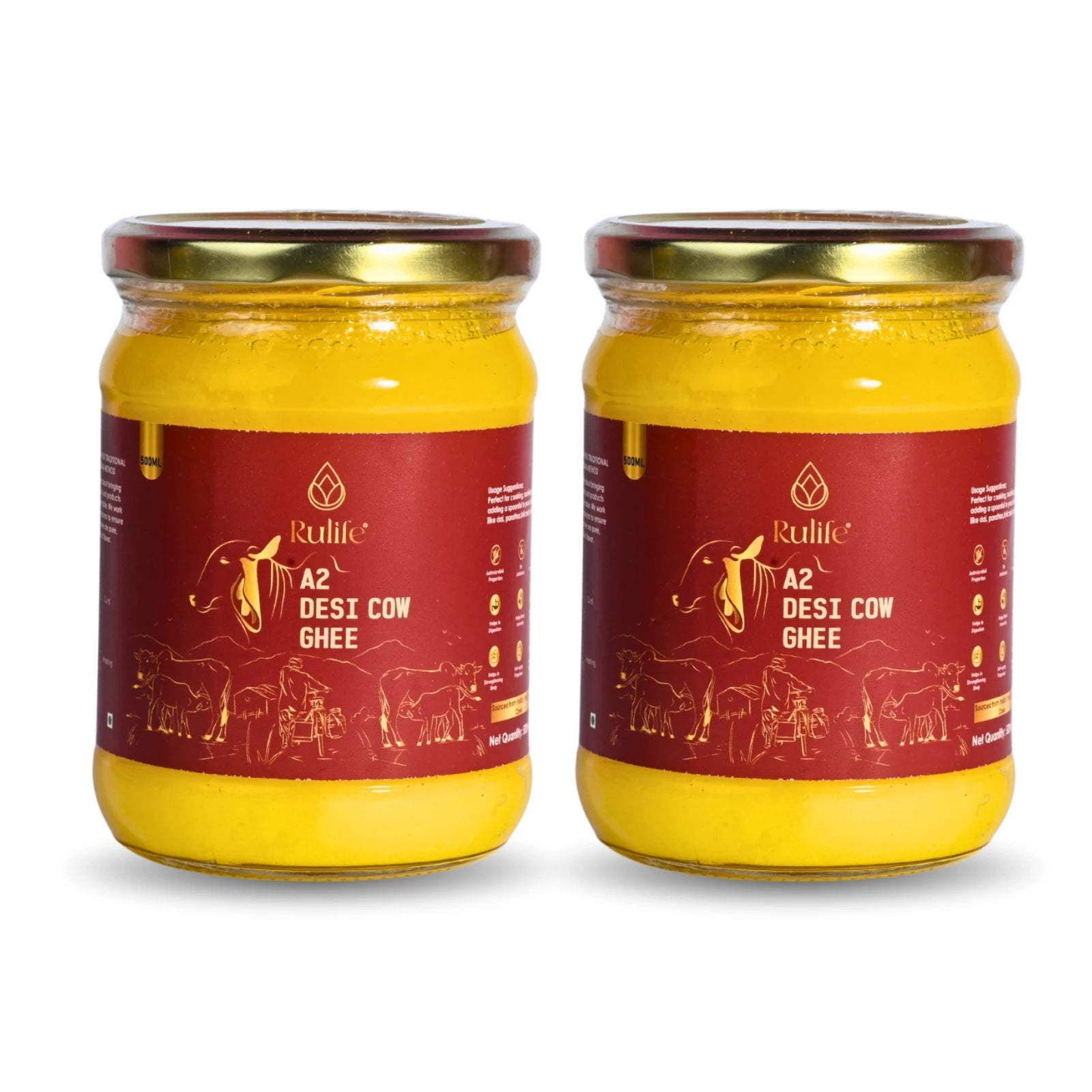
A2 Desi Cow Bilona Ghee sourced from indigenous desi cows on natural grass diets and made by the traditional Vedic Bilona process: fresh curd hand-churned to makhan, then slowly simmered into pure, aromatic ghee. No shortcuts, no commercial processing. Available in 110 ml, 500 ml and 1 L.
Why choose Rulife A2 Desi Cow Ghee
-
A2 beta-casein protein from indigenous desi cows, which many people find easier to digest than A1 milk
-
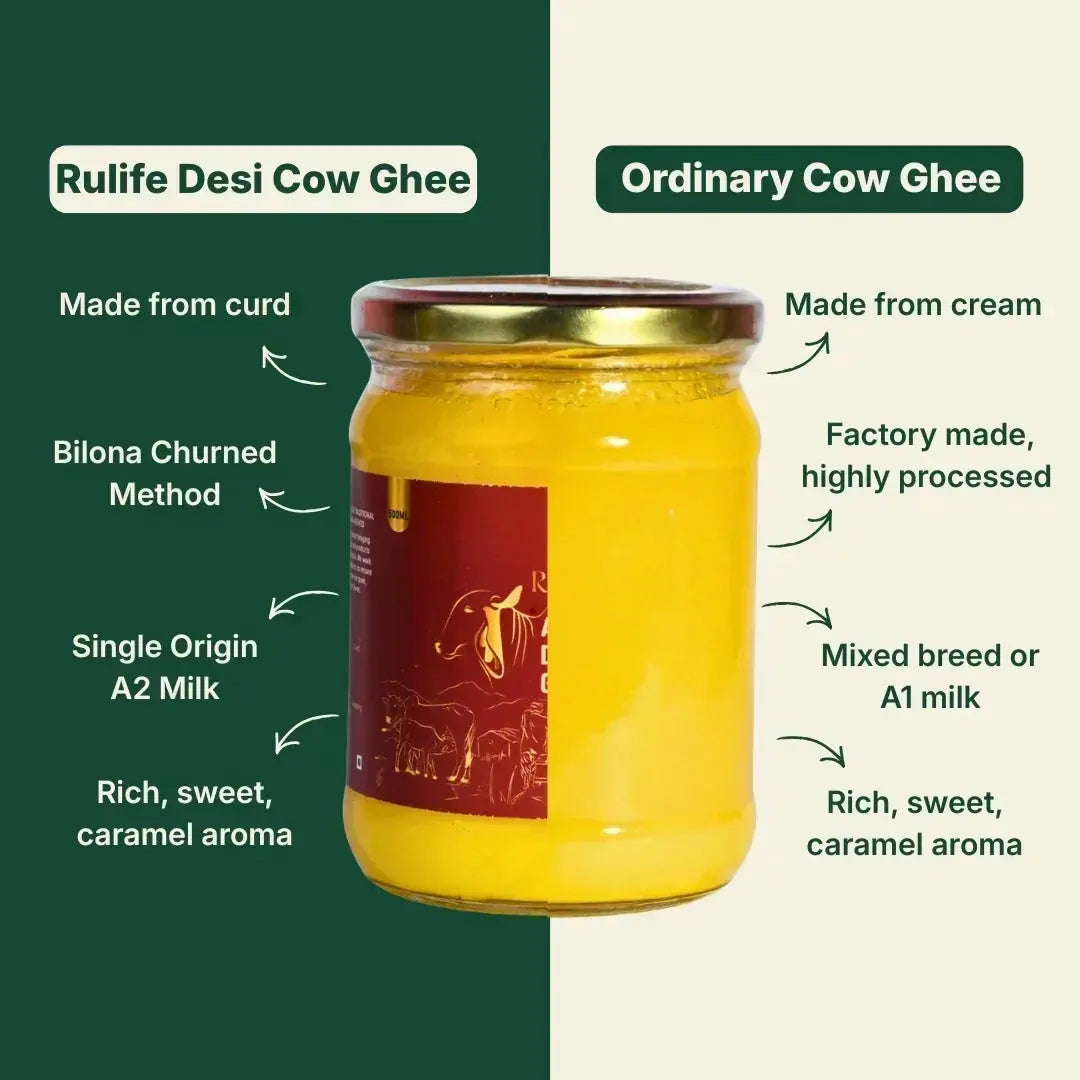
Bilona hand-churned from cultured curd, not from cream like commercial ghee
-
Naturally contains butyric acid, plus CLA and vitamins A, D, E and K
-
Grass fed and small batch, lab certified every batch
-
High smoke point around 250C, safe for tadka, deep frying and roasting
-
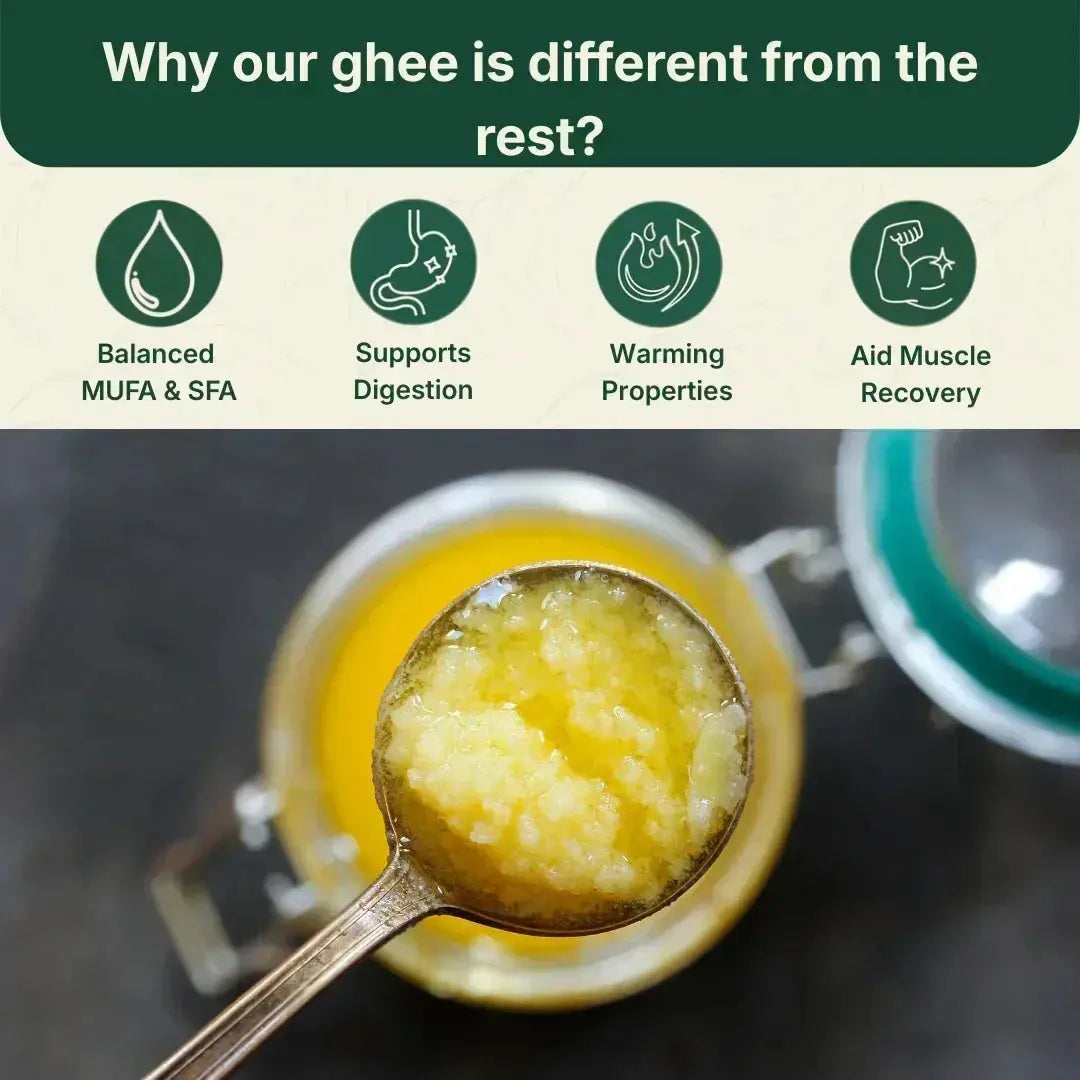
Naturally granular golden texture with a traditional aroma
Best for: roti, dal, khichdi, biryani, halwa and ladoo, baby food, Ayurvedic use, bulletproof coffee.
Grass fed · Bilona method · A2 beta-casein · Lab certified · Small batch · No additives
Rulife bilona ghee vs typical cream ghee
|
Rulife A2 Bilona |
Typical commercial ghee |
| Milk source |
Indigenous desi cows, A2 beta-casein |
Usually crossbred herds, A1 or mixed |
| Method |
Milk set into curd, hand-churned to makkhan, then simmered |
Cream separated by centrifuge and boiled directly |
| Culturing step |
Yes – this is what builds butyric acid and aroma |
Skipped |
| Milk per kg of ghee |
25-30 litres |
Less, because cream is concentrated first |
| Texture when set |
Naturally granular |
Smooth and uniform |
| Aroma |
Cooked milk and caramel |
Faint, sometimes deodorised |
Both are ghee. The difference is the culturing step, and it is the step that costs time. Read bilona ghee vs regular ghee.
Frequently Asked Questions
What is A2 ghee?
A2 ghee is made from the milk of indigenous Indian cow breeds such as Gir, Sahiwal and Tharparkar, which produce milk containing only A2 beta-casein protein. Most commercial ghee comes from hybrid or crossbred cattle whose milk contains A1 beta-casein. Many people find A2 easier to digest. Read the full comparison in A2 ghee vs A1 ghee.
Which ghee is best for health?
Look for three things: A2 milk from indigenous cows, the bilona method (churned from curd rather than cream), and grass-fed sourcing. Ghee made this way retains more butyric acid, CLA and fat-soluble vitamins than industrially separated ghee. See bilona ghee vs regular ghee.
How much ghee should I eat per day?
For most healthy adults, 1 to 3 teaspoons a day is a sensible range, spread across meals. Ayurveda traditionally recommends taking it warm with food. If you are managing cholesterol, diabetes or weight, speak to your doctor about what suits you.
Is ghee good for weight loss?
Ghee is calorie dense, so quantity matters, but the CLA and short-chain fats in it have been studied for fat metabolism, and a little fat with a meal improves satiety. It is not a weight loss food on its own. More detail in is ghee good for weight loss.
Is ghee bad for cholesterol?
In moderate amounts, current evidence does not support the idea that ghee harms cholesterol in healthy people, and it may improve some lipid markers. If you already have high cholesterol or heart disease, treat it as you would any saturated fat and consult your doctor. See is ghee bad for cholesterol.
Why is my ghee grainy or solid?
A granular texture is a sign of genuine bilona ghee, not a fault. It forms when pure ghee cools slowly and the fat crystallises naturally. Ghee also solidifies below about 25C and turns liquid in warm weather. Both are normal.
Can I give this ghee to babies?
Ghee is traditionally introduced in small quantities once a baby starts solids, usually around six months, but always follow your paediatrician’s advice. See ghee for babies.
How should I store it?
Keep it in a cool, dry place away from direct sunlight, and always use a dry spoon. Refrigeration is not needed. Properly stored bilona ghee keeps for months and its aroma deepens with age.